






.png)
Your credit score can affect many parts of your life. It may play a role when you apply for an apartment, credit card, auto loan, or mortgage.
But credit scores can also feel confusing, especially when you hear different advice from friends, family, or social media.
One question comes up often: does checking your credit score lower it?
The short answer is no. Checking your own credit score or credit report is usually considered a soft inquiry, and soft inquiries do not lower your credit score.
Applying for new credit is different. When a lender checks your credit as part of a credit application, it may create a hard inquiry, which can have a small, temporary effect on your score. The Consumer Financial Protection Bureau explains the difference between soft and hard inquiries.
In this guide, we will explain that difference and clear up four other common credit myths.
Key takeaways
- Checking your own credit score does not lower it.
- Soft inquiries are used for activities such as checking your own credit report or receiving a pre-screened offer. They do not affect your score.
- Hard inquiries may happen when you apply for a credit card, auto loan, personal loan, or mortgage. They can cause a small, temporary decrease.
- Carrying a credit card balance and paying interest is not required to build credit.
- Closing a credit card can affect your credit profile, especially if it reduces your available credit.
- Eligible on-time rent payments may help build credit when they are reported to the credit bureaus.
- A free credit report can help you review your credit information for errors or signs of identity theft.
Myth 1: Checking your credit score lowers it

This is one of the most common credit myths. It is also one of the easiest to correct.
When you check your own credit score or request your own credit report, the action is treated as a soft inquiry. Soft inquiries do not affect your credit score.
You can check your credit information to understand where you stand, look for errors, or monitor changes without worrying that the check itself will lower your score.
What is a soft inquiry?
A soft inquiry is a review of your credit file that is not connected to a formal application for new credit. Common examples include:
- Checking your own credit score or credit report
- Reviewing your credit through a bank or credit card app
- Receiving a pre-screened credit offer
- A company checking your credit for certain background or account-review purposes
Soft inquiries may appear on your credit report, but they are not used to lower your score.
They are different from the inquiries that lenders make when they are deciding whether to approve a new credit application.
What is a hard inquiry?
A hard inquiry can happen when you apply for new credit and give a lender permission to review your credit as part of its decision. Examples include applying for:
- A new credit card
- An auto loan
- A personal loan
- A student loan
- A mortgage
Hard inquiries can have a small, temporary effect on your score.
The exact impact depends on your credit profile and the scoring model being used.
A hard inquiry is not the same as checking your own score, and it should not stop you from applying for credit you genuinely need. It is simply one reason to compare your options and avoid submitting many applications at once.
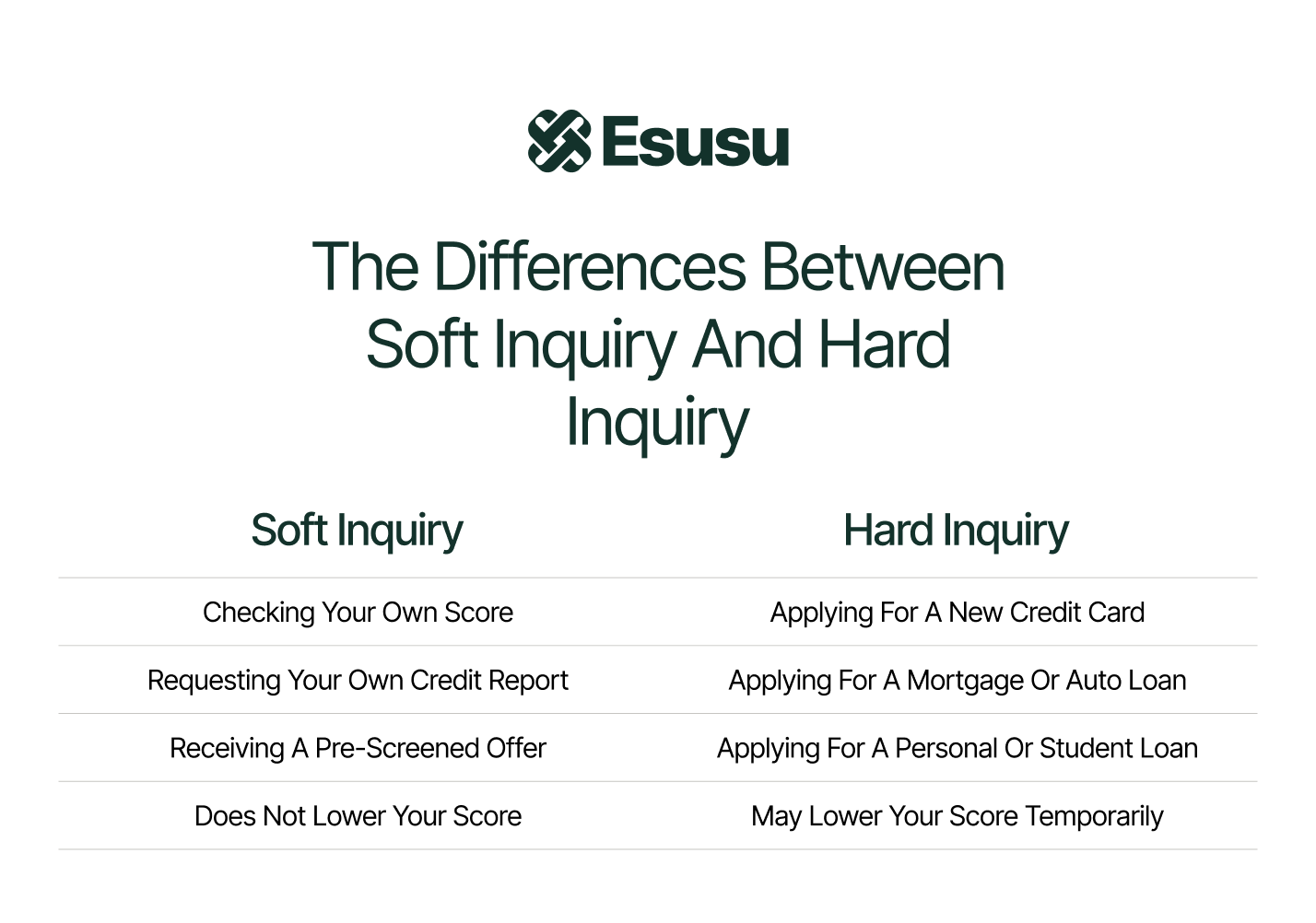
Before a lender checks your credit, you can ask whether the check will be soft or hard. If you are only comparing possible offers, ask whether you can be prequalified without a hard inquiry.
Myth 2: Closing a credit card always improves your credit
After paying off a credit card, you may want to close the account so you are not tempted to use it again.
In some cases, closing a card makes sense. For example, you may be paying an annual fee that no longer feels worthwhile.
However, closing a credit card can also change your credit profile.
When you close an account, you may reduce the total amount of credit available to you. If you still have balances on other cards, your overall credit utilization may increase.
Credit utilization is the amount of revolving credit you are using compared with your total credit limits.
For example, imagine that you have two credit cards with a combined limit of $10,000 and a total balance of $2,000. Your utilization is 20%. If you close a card with a $5,000 limit, the same $2,000 balance now represents 40% of your available credit.
The effect of closing a card depends on your full credit profile. Consider the annual fee, the account’s credit limit, how long you have had it, and whether you can keep it open without taking on debt.
If you decide to close it, check your other balances and understand how the change may affect your available credit.
Myth 3: Applying for a credit card only hurts your score if you are approved
A credit application can lead to a hard inquiry even if the lender does not approve your application. The inquiry is connected to the application itself, not to the result.
One hard inquiry usually has a limited effect, but several applications in a short period may make it look like you are actively seeking a large amount of new credit.
That can affect how lenders view your application and may have a larger effect on your score.
This does not mean you should never apply for credit. A new credit card or loan may be useful when it fits your budget and financial goals.
Before applying, compare fees, interest rates, rewards, and eligibility requirements. If a lender offers a prequalification process, find out whether it uses a soft inquiry.
When shopping for certain types of loans, such as an auto loan or mortgage, multiple inquiries made within a limited period may be treated differently by scoring models.
The timing rules can vary, so ask your lender how applications will be handled.
Myth 4: You need to carry a balance to build credit
You do not need to carry a credit card balance or pay interest to build credit. This is a common myth that can lead people to spend more than they can afford.
Paying your statement balance in full can help you avoid interest charges and support a consistent payment history.
However, paying in full does not always mean that your reported credit utilization will be zero. Card issuers may report a balance during the billing cycle, often around the statement closing date, before your payment due date.
The important habits are to make payments on time, avoid taking on debt you cannot manage, and keep your balances reasonable compared with your credit limits.
If you are trying to reduce the balance that appears on your credit report, check with your card issuer to understand when it reports account information.
Carrying a balance from month to month is not a shortcut to a higher score. It can create interest charges and make it harder to pay down debt.
Myth 5: Your rent does not matter for your credit
For many renters, on-time rent payments are one of their largest monthly financial commitments. Yet rent is not automatically included in every credit report.
Whether rent affects your credit depends on how the payment information is collected, verified, and reported.
When eligible on-time rent payments are reported to the credit bureaus, they may add positive payment history to your credit file.
Rent reporting can be especially helpful for people who are new to credit or have a limited credit history. It is not a guaranteed score increase, and the outcome can vary based on your existing accounts, payment history, utilization, and the scoring model being used.
At Esusu, we help eligible renters turn on-time rent payments into positive credit data. We report eligible payments to Equifax, Experian, and TransUnion. And report on-time payments only, so missed or late rent payments are not reported through our rent reporting service.
In some cases, we may also be able to report up to 24 months of past on-time rent payments when reliable records are available. Learn more about Esusu Rent Reporting.
Rent reporting does not require you to open a new credit card or take on new traditional debt. It also does not guarantee a specific score increase or approval for a credit product. Individual results vary.
See whether you are eligible for Esusu rent reporting and start exploring your credit-building options.
What actually lowers your credit score?
Checking your own credit is not the problem. The following events and habits may affect your score more directly:
1. Missing or late payments
Payment history is an important part of most credit scoring models. A payment that is reported late can hurt your score, especially if it is significantly past due. Set up payment reminders or automatic payments for at least the minimum amount due, and contact the creditor if you think you may miss a payment.
2. Using too much of your available credit
High credit card balances compared with your credit limits may signal higher risk to scoring models. Paying down balances can reduce your utilization, but remember that the balance reported to the credit bureaus may depend on when your issuer reports account information.
3. Applying for several new accounts at once
Each formal credit application may create a hard inquiry. Multiple applications in a short period can affect your score and may make lenders question whether you are taking on more debt than you can manage.
4. Accounts sent to collections or serious defaults
Unpaid debts that are sent to collections, loan defaults, repossessions, foreclosures, and bankruptcies can all create serious negative information on a credit report. The rules can vary by account type, so review your report carefully and seek guidance if you do not recognize an item.
5. Errors or identity theft
An incorrect late payment, unfamiliar account, or unauthorized inquiry can affect your credit profile.
Review your reports regularly and dispute information that is inaccurate.
Eligible renters may be able to access a free credit report each month through the Esusu app. Review it for unfamiliar accounts, incorrect balances or payment information, and unauthorized inquiries.
If you find an error or suspect identity theft, follow the appropriate dispute or identity-theft reporting process with the credit bureau.

Your credit score is not your whole financial story
A credit score is useful, but it does not show everything about your financial habits.
A free credit report can help you understand the information behind your score and identify items that may need to be corrected.
Eligible renters may be able to use the Esusu app to review their credit score, score history, and a monthly credit report.
For renters with a thin credit file or a lower score, regularly reviewing credit information can make it easier to notice changes and address problems early.
Your credit score is one part of your overall credit profile.
Use the Esusu app to follow your credit journey and review available credit information.
Frequently asked questions
The bottom line
Does checking your credit score lower it? No.
Checking your own score is generally a soft inquiry and does not hurt your credit.
The checks to pay closer attention to are hard inquiries connected to applications for new credit.
The best way to protect your credit is to review your credit report regularly, look for errors or signs of identity theft, pay bills on time, and manage your balances.
If you rent, your on-time payments may also be part of your credit-building journey through eligible rent reporting.
A free credit report can help you understand and monitor your credit profile, identify errors, and spot possible signs of identity theft.


.png)

